Tax season in India often brings a wave of confusion. While we all know the importance of filing our Income Tax Returns (ITR) on time, the real challenge lies in selecting the correct form. With several options available—ITR-1, ITR-2, ITR-3, and ITR-4—making the wrong choice can lead to delays or even scrutiny from the tax department.
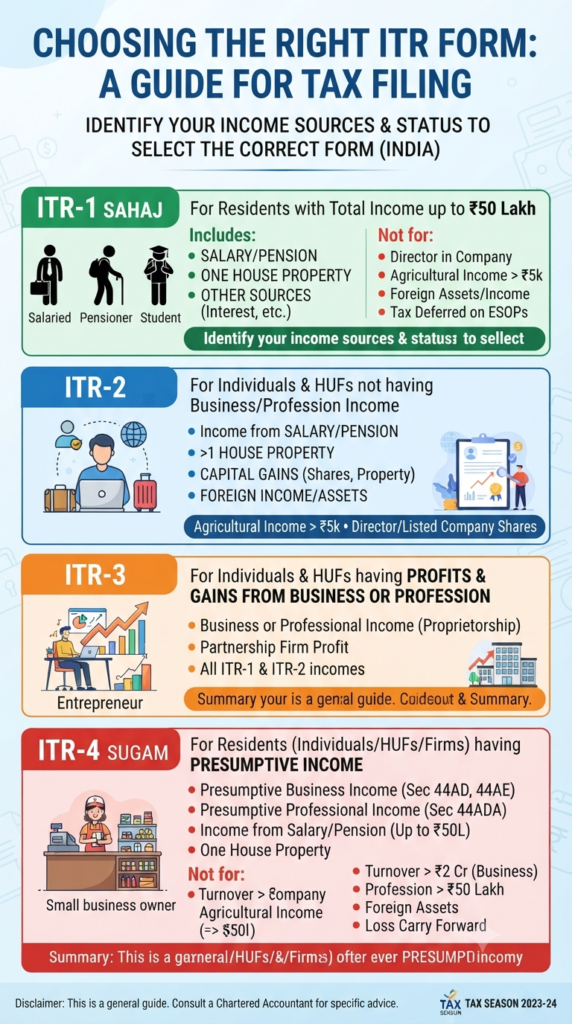
This year, simplify your tax filing with our straightforward guide based on the official 2023-24 Tax Season poster. Whether you are a salaried individual, a pensioner, or a business owner, understanding your income sources is the first step to picking the perfect ITR form.
Here is a breakdown to help you navigate the process.
1. ITR-1 SAHAJ: The Simplest Form for Salaried Individuals
If you are a resident Indian with straightforward finances, ITR-1 is likely your go-to form. It is designed to be simple and quick.
Who should file ITR-1?
- Salaried employees.
- Pensioners.
- Students or individuals with income from other sources (like savings account interest).
Conditions apply: This form is only for those whose Total Income does not exceed ₹50 Lakh during the financial year.
You CANNOT use ITR-1 if you have:
- Income from Foreign Assets.
- More than one House Property.
- Capital Gains (profits from selling stocks, mutual funds, or property).
- Income as a Director in a company.
- Agricultural Income exceeding ₹5,000.
- Tax deferred on ESOPs (Employee Stock Ownership Plans).
2. ITR-2: For Those with Capital Gains & Foreign Assets
If your financial situation is more complex but you do not own a business or profession, ITR-2 is the correct choice. This form is specifically for individuals and HUFs (Hindu Undivided Families) who are “not having Business/Profession Income.”
Who should file ITR-2? Individuals and HUFs who earn income from:
- Salary and Pension.
- More than one House Property.
- Capital Gains (Profit from selling shares, bonds, or real estate).
- Foreign Assets/Income.
Key inclusion: You also need to use ITR-2 if you are a Director in a company or hold shares in an unlisted company, regardless of your income level.
3. ITR-3: For Business Owners & Professionals
If you run your own business or practice a profession (like a doctor, lawyer, or consultant), ITR-3 is the form for you. This is the comprehensive form for individuals and HUFs earning “Profits and Gains from Business or Profession.”
Who should file ITR-3?
- Business owners filing under the proprietorship model.
- Partners in a partnership firm (where profit is being reported).
- Individuals who have income from all sources covered in ITR-1 and ITR-2, plus business income.
Essentially, if your income does not qualify for the “Presumptive Taxation” scheme (which we will cover next), ITR-3 is your option.
4. ITR-4 SUGAM: For the Presumptive Income Scheme
ITR-4 is a simplified form designed for small taxpayers who choose to declare their income on a “presumptive basis.” This scheme (Sections 44AD, 44AE, or 44ADA) allows certain small businesses and professionals to declare a specific percentage of their turnover/receipts as profit, saving them from maintaining detailed books of accounts.
Who should file ITR-4?
- Residents (Individuals, HUFs, and Firms) opting for presumptive income.
- Income from Salary/Pension up to ₹50 Lakh.
- Income from One House Property.
Conditions for Presumptive Income eligibility:
- Business Turnover must not exceed ₹2 Crore.
- Professional Gross Receipts must not exceed ₹50 Lakh.
You CANNOT use ITR-4 if you have:
- Foreign Assets.
- Income from Capital Gains.
- Loss Carry Forward.
Final Takeaway
Choosing the right ITR form is the foundation of a hassle-free tax filing experience. To make your selection:
- Identify your source(s) of income (Salary, Business, Capital Gains, etc.).
- Determine your residential status (Resident, Non-Resident).
- Verify the limits (e.g., the ₹50 Lakh cap for ITR-1).
Disclaimer: While this guide is based on the provided infographic for the 2023-24 tax season, tax laws can be complex. We highly recommend consulting a qualified Chartered Accountant (CA) for specific advice tailored to your financial situation before filing your return.
The Freedom Multiplier: Why Controlling Your ‘Ws’ Beats Chasing More Money

The narrative of Indian finance is changing. For generations, the Indian investor’s journey began and ended with safe, traditional avenues like fixed deposits and gold. While secure, these options often struggled to beat inflation, limiting true wealth creation. Today, that script is being rewritten. We are witnessing an unprecedented “financial awakening,” where millions of Indians…
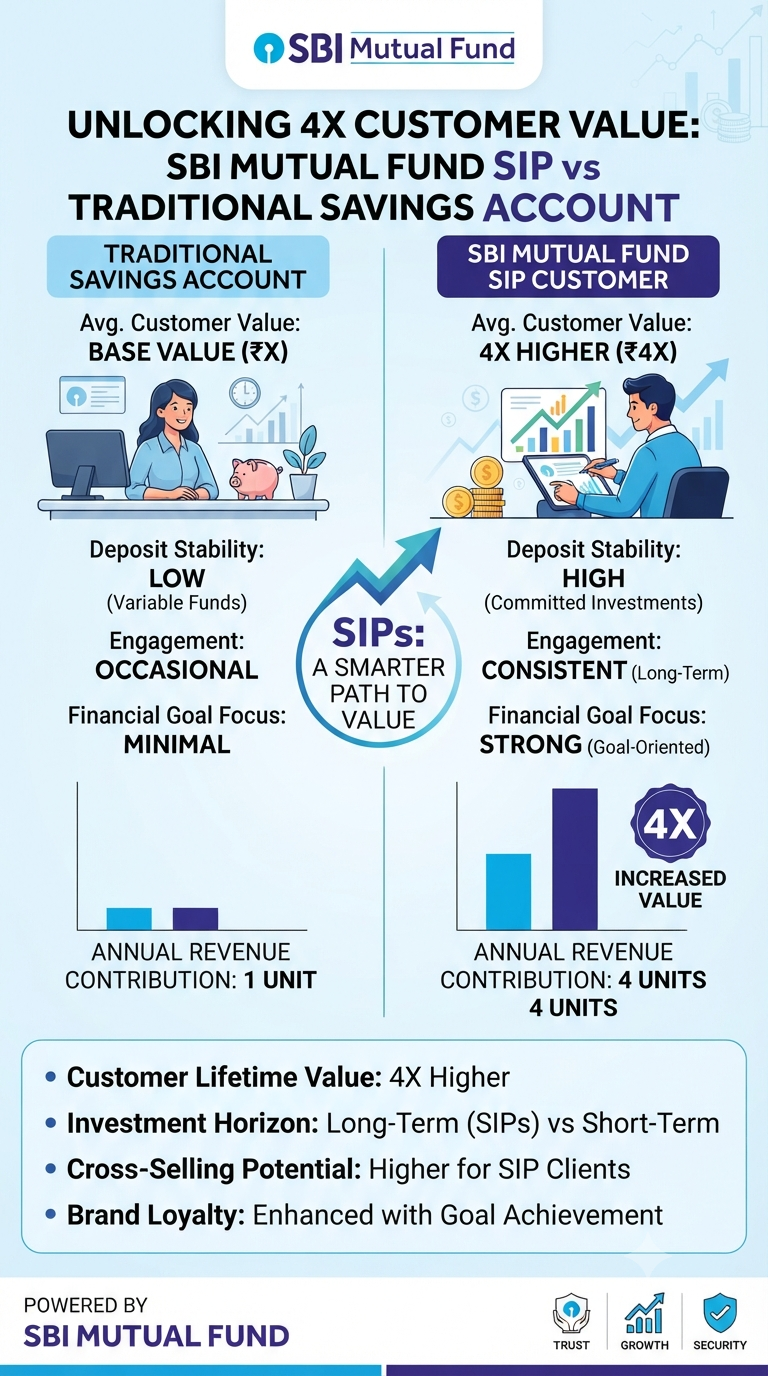
Have you ever wondered what banks and mutual fund houses really think about your accounts? We often view our savings account as the foundation of our financial life—a place to park our salary, pay our bills, and keep our “emergency” cash. But there is a growing realization in the financial world that the traditional savings…
Continue Reading Why Your SIP is More Than Just an Investment—It’s Your New Financial “Superpower”

If you have ever held a bank account, real estate, or stocks in another country, you know the anxiety that can come with filing your Income Tax Return (ITR). There has always been a subtle question in the back of many taxpayers’ minds: “Does the tax department already know about this?” As of July 8,…
Continue Reading Hidden No More: What the New AIS Update Means for Your Foreign Assets
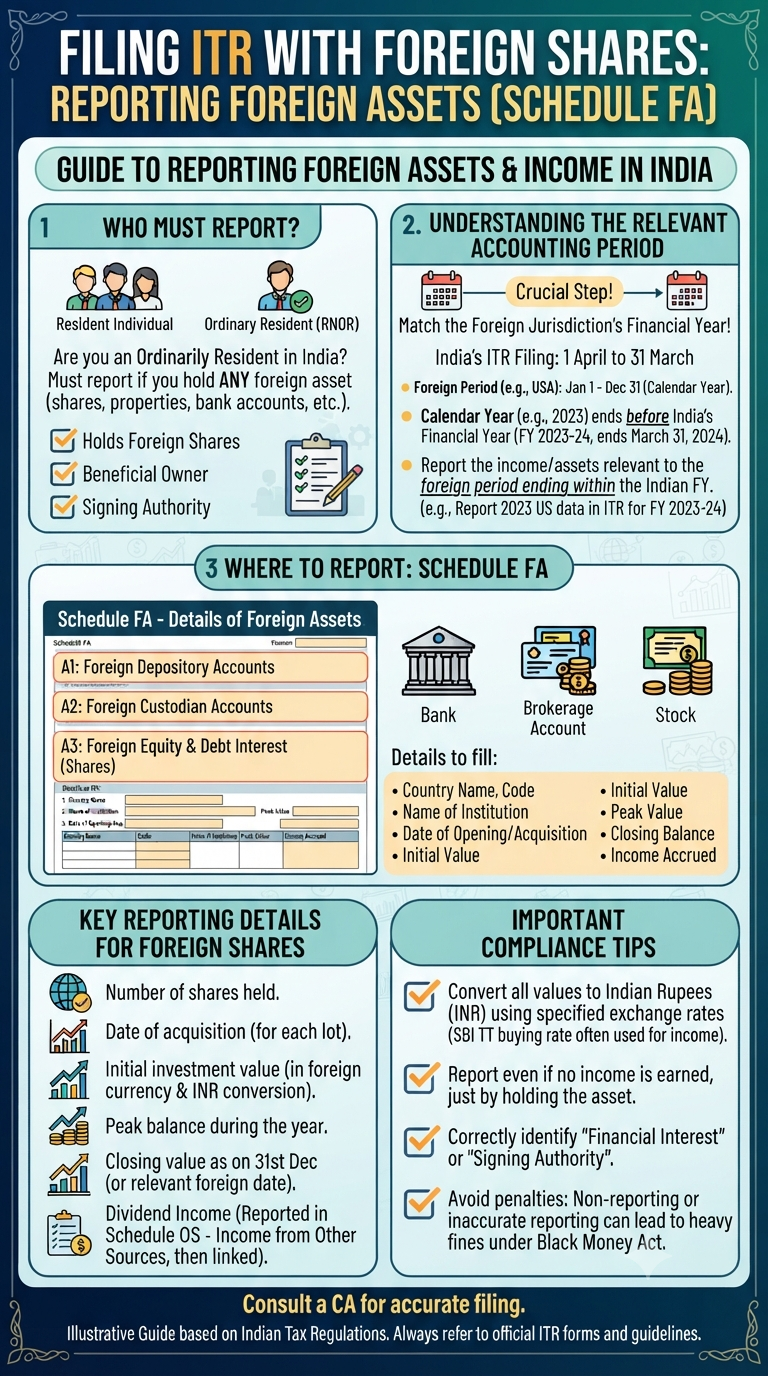
So, you’ve dipped your toes into the global market. Whether it’s those Google shares you picked up, a mutual fund in a different country, or simply maintaining an account abroad, investing internationally can be an exciting journey. But as the tax season rolls around, a common question often pops up: “Do I really need to…
Continue Reading Beyond Borders: A Simple Guide to Reporting Your Foreign Assets in Your ITR
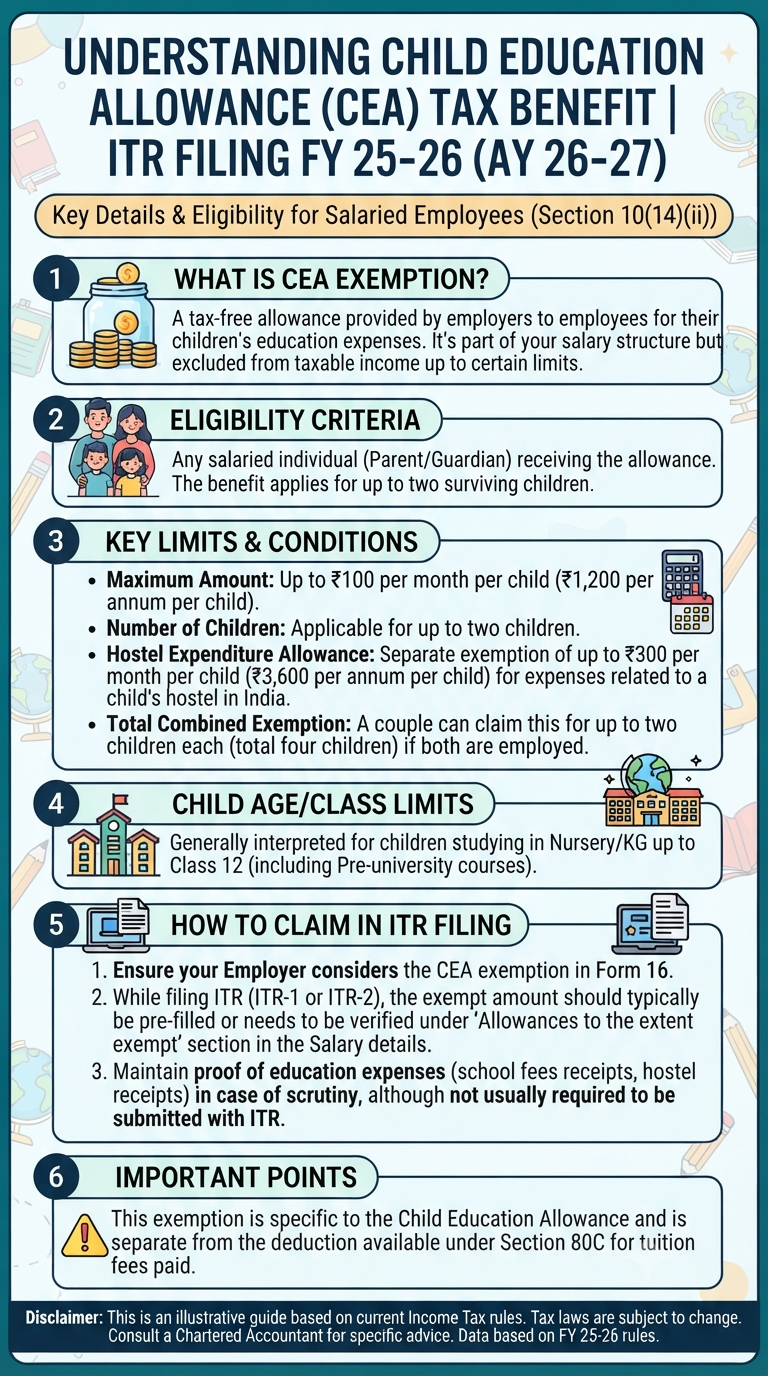
If you’re a salaried parent, you know that the costs of schooling—from uniforms to those ever-increasing activity fees—can add up fast. While we all want the best for our kids, wouldn’t it be nice if the taxman gave us a little breather? Enter the Child Education Allowance (CEA). It’s one of those “hidden” perks in…
Continue Reading Decoding Your Paycheck: A Simple Guide to the Child Education Allowance (CEA)
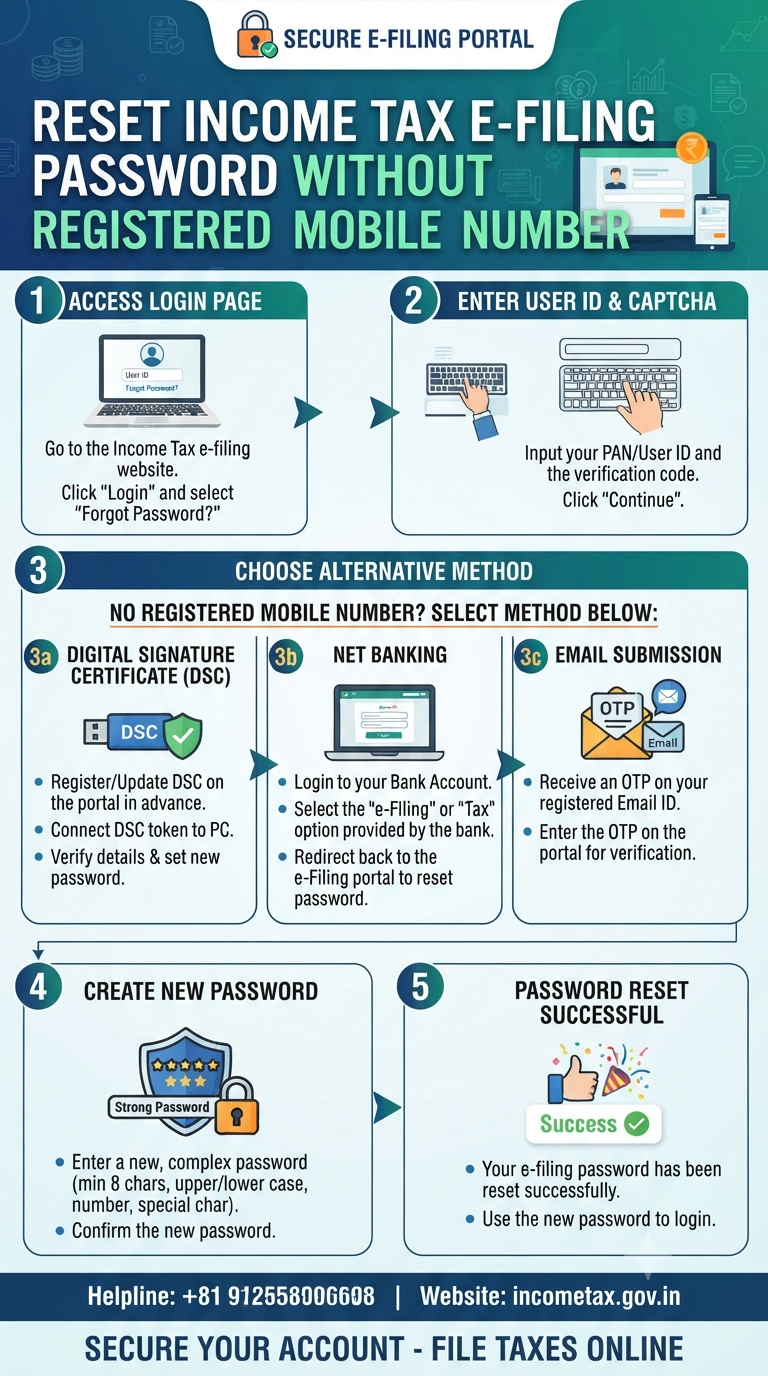
Locked Out of Your Income Tax Account? How to Reset Your Password Without a Registered Mobile Number
We’ve all been there—it’s time to file your ITR, you sit down with your documents, head to the Income Tax e-filing portal, and then… total blank. You’ve forgotten your password. Usually, this is a minor annoyance solved by a quick OTP sent to your registered mobile number. But what if you’ve changed your number, lost…

Shreejith is the founder of InfographicStory.com, a hub for visual learning and data storytelling. Dedicated to simplifying complex ideas, he creates infographics that turn facts into insights. Have questions or collaboration ideas? Reach out to him at storyinfographic@gmail.com.