Have you ever wondered what banks and mutual fund houses really think about your accounts? We often view our savings account as the foundation of our financial life—a place to park our salary, pay our bills, and keep our “emergency” cash.
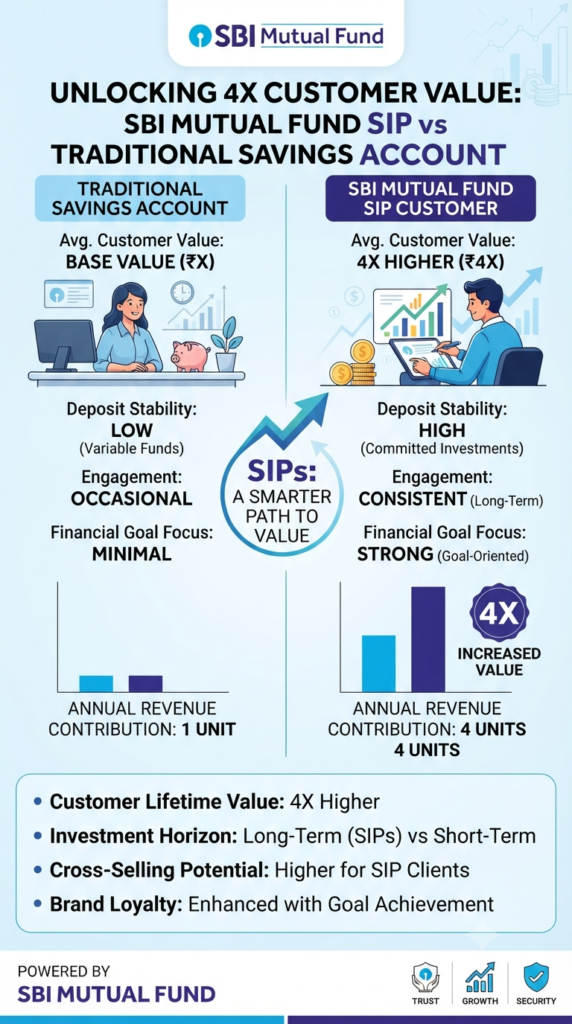
But there is a growing realization in the financial world that the traditional savings account holder is, well, just that—a holder. A new perspective emerging from industry leaders like SBI Mutual Fund is changing the game: Those who pair their savings accounts with a Systematic Investment Plan (SIP) are four times more valuable than those who don’t.
Wait—more valuable to them? Or more valuable to you? Let’s pull back the curtain on why this shift is happening and why it matters for your wallet.
The Problem with “Idle” Savings
For many, a savings account is essentially a “waiting room” for money. You deposit money, you withdraw it for rent, shopping, or expenses, and the balance fluctuates wildly. To a bank, this is high-maintenance, low-impact traffic. It’s transactional. It keeps the lights on, but it doesn’t build a future.
The Power of the SIP Mindset
When you start a SIP, you aren’t just moving money; you’re making a commitment. Here is why this tiny shift turns you into a “4X” customer:
- From Transience to Stability: While a typical savings account balance is unpredictable, an SIP investor is usually in it for the long haul. Retail investors who opt for SIPs tend to stay committed for 5 to 7 years or longer. This predictability is golden—not just for the institution, but for your own financial health.
- The Compound Effect: A savings account earns minimal interest, often failing to keep up with inflation. An SIP, however, harnesses the power of compounding. When you stop looking at your money as something to be “spent” and start looking at it as a tool to be “invested,” you cross the threshold from being a consumer to a creator of wealth.
- The Goal-Oriented Shift: The core difference between a “savings account user” and an “SIP investor” is intent. The investor is looking at the horizon—retirement, children’s education, or that dream home. By setting up an SIP, you stop managing expenses and start managing goals.
Why 4X?
You might wonder where that “four times more valuable” figure comes from. It isn’t just about the fee the mutual fund house earns. It’s about the depth of the relationship. A customer who integrates investments into their banking life is more financially literate, more engaged with their bank’s digital platforms, and more likely to achieve their life goals. They aren’t just “customers”; they are partners in a long-term financial journey.
The Bottom Line: Be the 4X Investor
If you have been sitting on your savings, waiting for “the right time” to start investing, remember this: the system already knows the secret. The people who are winning financially aren’t the ones with the largest savings account balances; they are the ones who are consistently feeding their future through disciplined, monthly SIPs.
You don’t need a massive windfall to get started. You just need to change your relationship with your money. Move it out of the “waiting room” and put it to work.
Your future self is already four times more grateful that you did.
Disclaimer: Investing in mutual funds is subject to market risks. Please read all scheme-related documents carefully before investing.
Hidden No More: What the New AIS Update Means for Your Foreign Assets

We’ve all been there—scrolling through an investment app, seeing a shiny new mutual fund, and thinking, “Why not? Adding another one can’t hurt, right?” It’s easy to fall into the trap of “fund collecting.” You assume that by holding ten, fifteen, or twenty different schemes, you’re becoming the ultimate master of diversification. But according to…
Continue Reading Less is More: Why Your Portfolio Doesn’t Need a Dozen Mutual Funds

The narrative of Indian finance is changing. For generations, the Indian investor’s journey began and ended with safe, traditional avenues like fixed deposits and gold. While secure, these options often struggled to beat inflation, limiting true wealth creation. Today, that script is being rewritten. We are witnessing an unprecedented “financial awakening,” where millions of Indians…

If you have ever held a bank account, real estate, or stocks in another country, you know the anxiety that can come with filing your Income Tax Return (ITR). There has always been a subtle question in the back of many taxpayers’ minds: “Does the tax department already know about this?” As of July 8,…
Continue Reading Hidden No More: What the New AIS Update Means for Your Foreign Assets
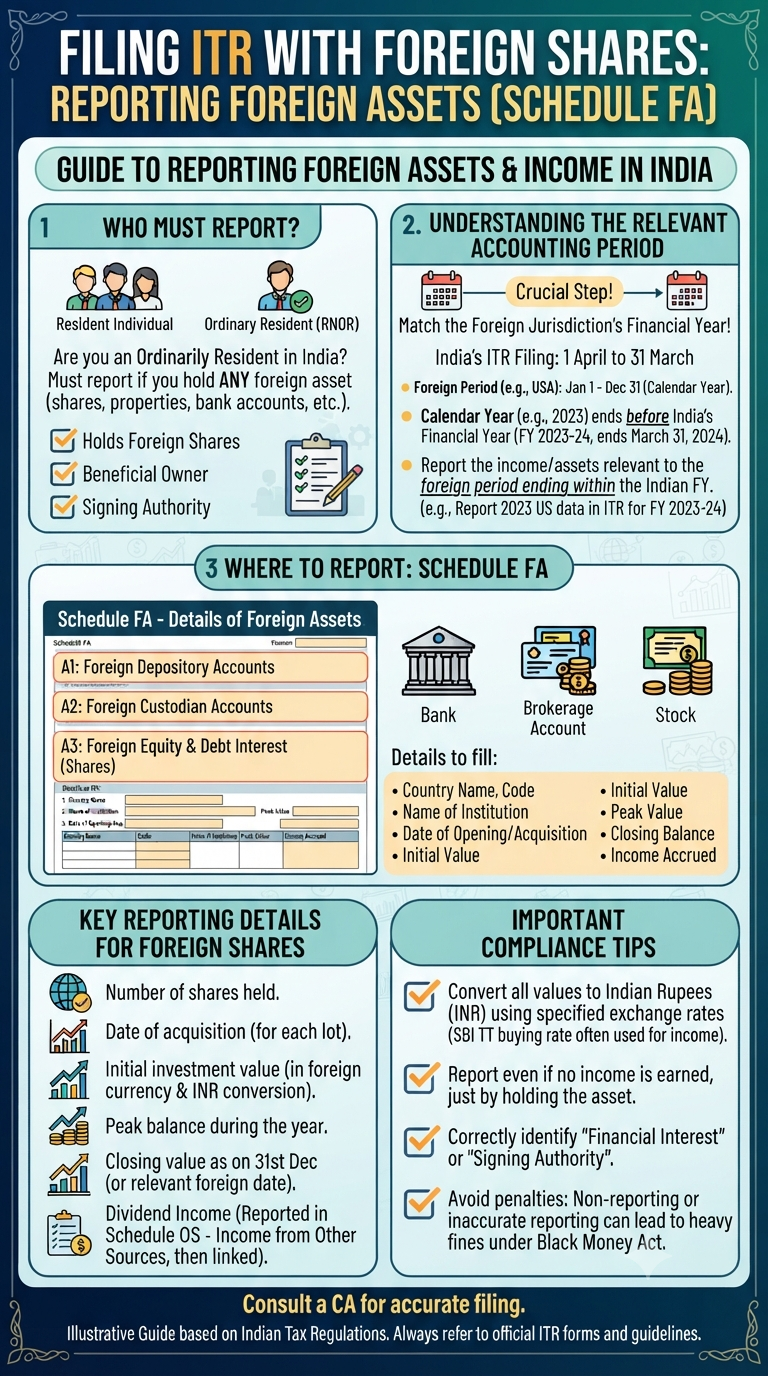
So, you’ve dipped your toes into the global market. Whether it’s those Google shares you picked up, a mutual fund in a different country, or simply maintaining an account abroad, investing internationally can be an exciting journey. But as the tax season rolls around, a common question often pops up: “Do I really need to…
Continue Reading Beyond Borders: A Simple Guide to Reporting Your Foreign Assets in Your ITR
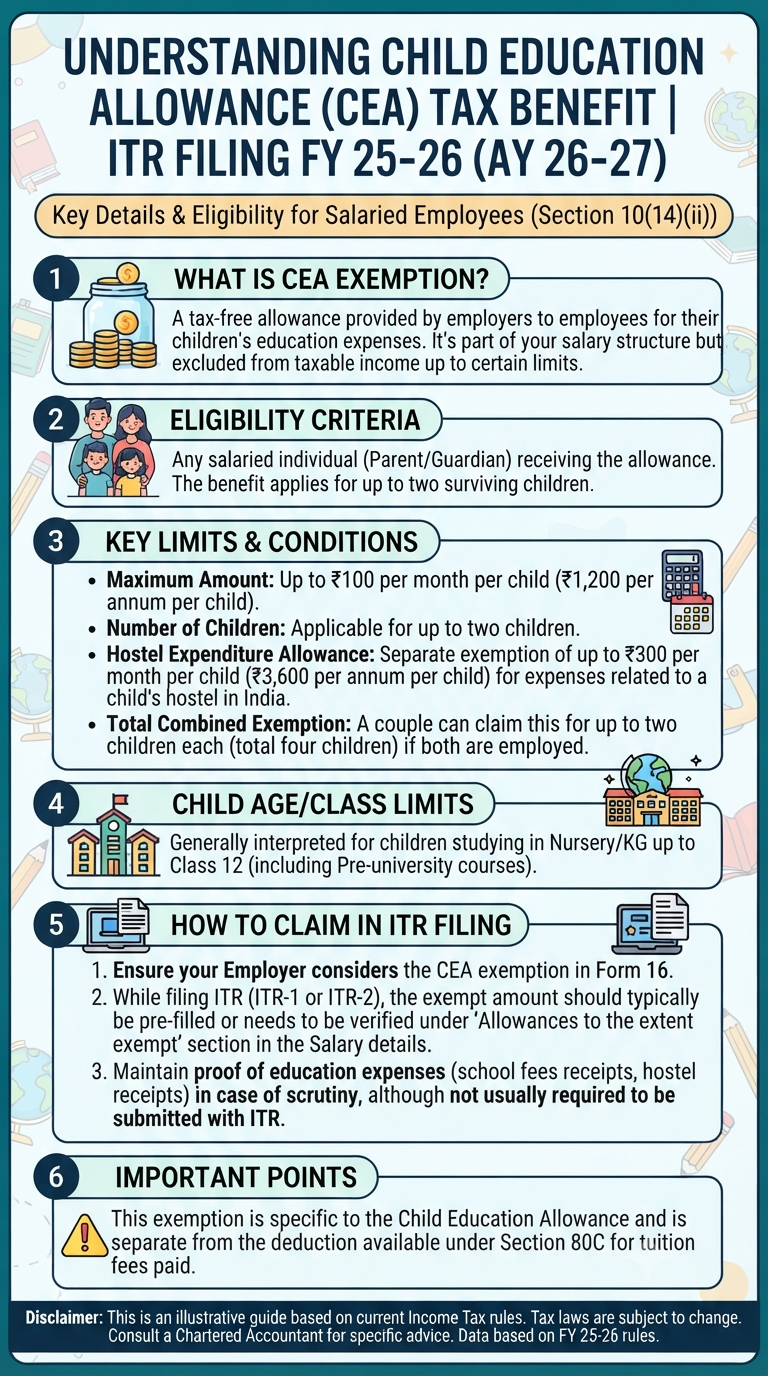
If you’re a salaried parent, you know that the costs of schooling—from uniforms to those ever-increasing activity fees—can add up fast. While we all want the best for our kids, wouldn’t it be nice if the taxman gave us a little breather? Enter the Child Education Allowance (CEA). It’s one of those “hidden” perks in…
Continue Reading Decoding Your Paycheck: A Simple Guide to the Child Education Allowance (CEA)
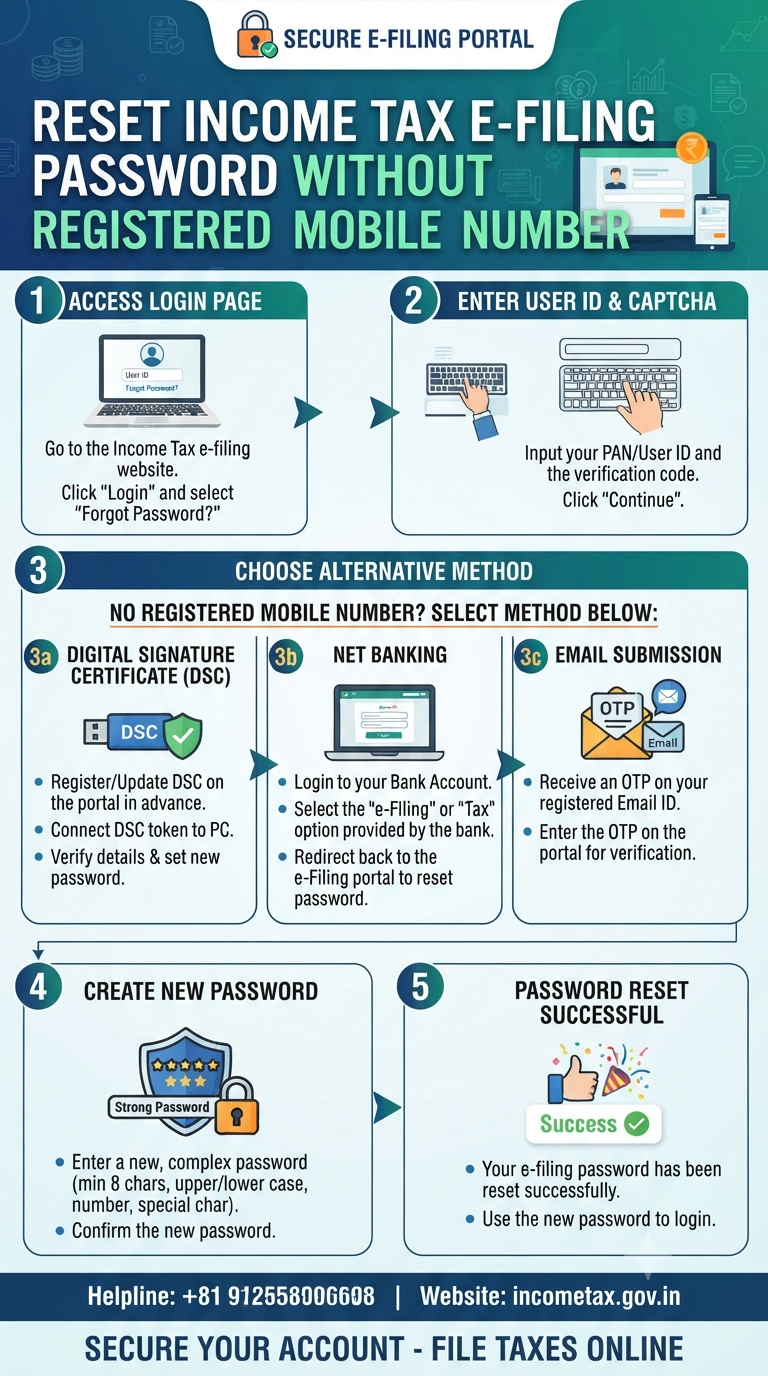
Locked Out of Your Income Tax Account? How to Reset Your Password Without a Registered Mobile Number
We’ve all been there—it’s time to file your ITR, you sit down with your documents, head to the Income Tax e-filing portal, and then… total blank. You’ve forgotten your password. Usually, this is a minor annoyance solved by a quick OTP sent to your registered mobile number. But what if you’ve changed your number, lost…

Shreejith is the founder of InfographicStory.com, a hub for visual learning and data storytelling. Dedicated to simplifying complex ideas, he creates infographics that turn facts into insights. Have questions or collaboration ideas? Reach out to him at storyinfographic@gmail.com.