So, you’ve finally tackled the task of filing your Income Tax Return (ITR) for Assessment Year 2026-27. You’ve gathered your documents, crunched the numbers, and hit that “submit” button. But wait—is the job actually done?
Many of us feel that sense of lingering uncertainty after clicking “submit.” Is it processed? Is there a refund on the way? Or, heaven forbid, is there a snag that needs your immediate attention?
Tracking your ITR status isn’t just a “nice-to-have”—it’s the final, crucial step of the filing process that ensures your tax journey ends smoothly. Here is how you can stay on top of your return without the headache.
Why You Should Keep an Eye on Your Status
Think of the ITR Status portal as your tax dashboard. It doesn’t just tell you if your return is “received”; it serves as a command center where you can:
- Download critical documents: Grab your ITR-V acknowledgment, uploaded JSON files, or even your intimation order once processing is complete.
- Catch errors early: If your return is flagged as “defective,” the portal will let you know so you can fix it before things get complicated.
- Verify your filing: It’s a great way to confirm that your e-verification is complete, which is the only way to make your filed return legally valid.
How to Check Your Status: Two Easy Paths
Whether you’re a tech-savvy user or someone who just wants to check in quickly, the Income Tax Department offers two simple ways to see where you stand.
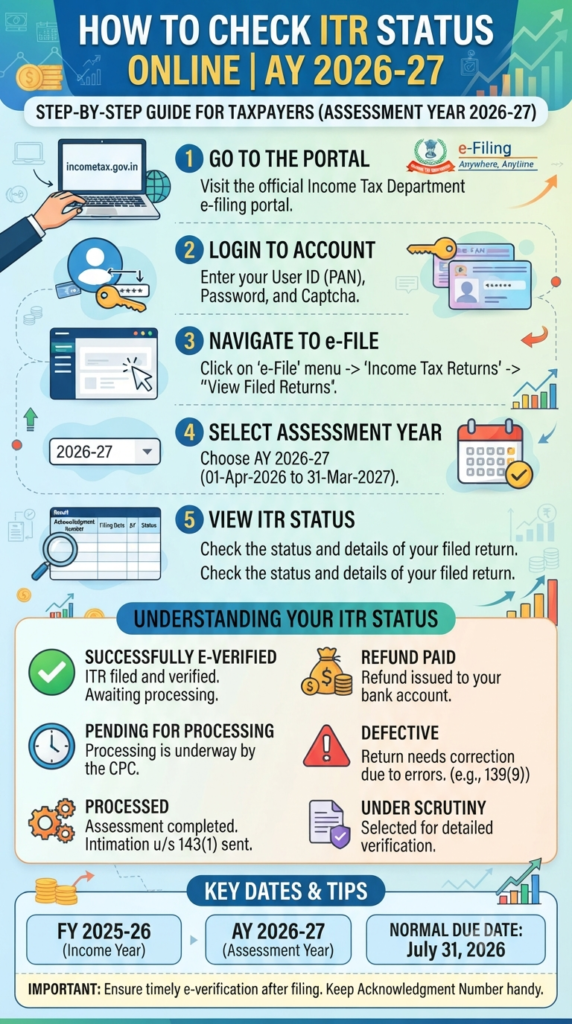
1. The “Quick Check” (Pre-Login)
If you’re in a rush or just want a fast update, you don’t even need to remember your password. All you need is your Acknowledgment Number and your registered mobile number.
- Head to the official e-filing portal and click on the “ITR Status” option on the homepage.
- Pop in your acknowledgment number, verify with the OTP sent to your phone, and you’re in.
2. The “Deep Dive” (Post-Login)
For a bird’s-eye view of your entire filing history, logging in is the way to go.
- Once you’ve signed in, head over to the ‘e-File’ menu, select ‘Income Tax Returns’, and click ‘View Filed Returns’.
- This gives you the full scoop on all your past returns, including the ability to export your data to Excel for your personal records.
Pro-Tip: Don’t Let Your PAN Get In the Way
One last thing to watch out for: ensure your PAN is linked with your Aadhaar. If your PAN becomes inoperative, the system won’t be able to issue your refund. The portal will usually alert you if this is an issue, providing a handy “Link Now” option to get you back on track.
Final Thought: Tax filing shouldn’t be a “file and forget” activity. By taking just a few minutes to check your status, you’re not just ensuring compliance—you’re securing your peace of mind.
Disclaimer: This information is for educational purposes only. Tax laws can be complex, so always consult with a qualified tax expert if you’re unsure about your specific situation.
Master Your Market Losses: How to Turn Trading Red Into Tax Gold
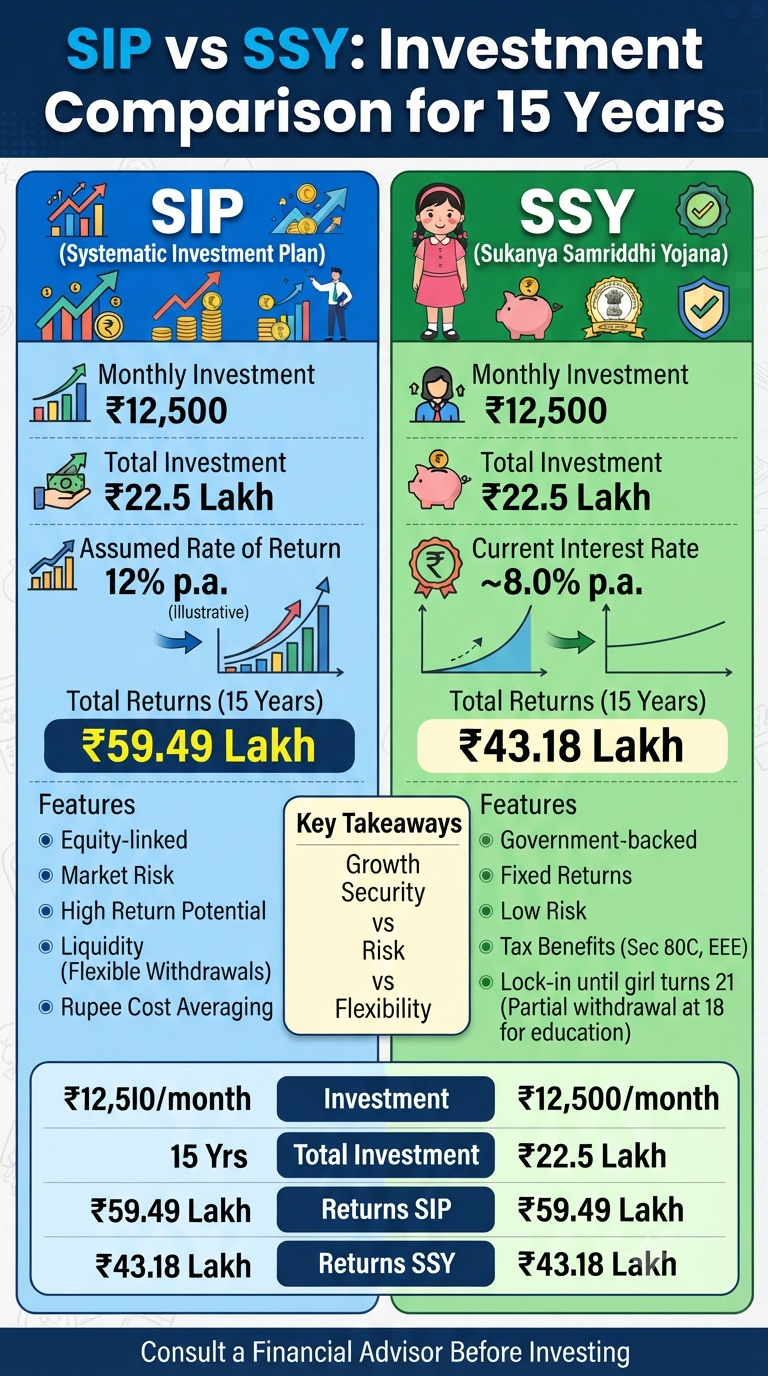
Investing for the future is crucial, and choosing the right investment avenue can make a significant difference in achieving your financial goals. Two popular options in India are the Systematic Investment Plan (SIP) and the Sukanya Samriddhi Yojana (SSY). Let’s delve into a detailed comparison to help you make an informed decision. SIP: Equity-linked and…
Continue Reading SIP vs. SSY: A Detailed Comparison for a Secure Financial Future
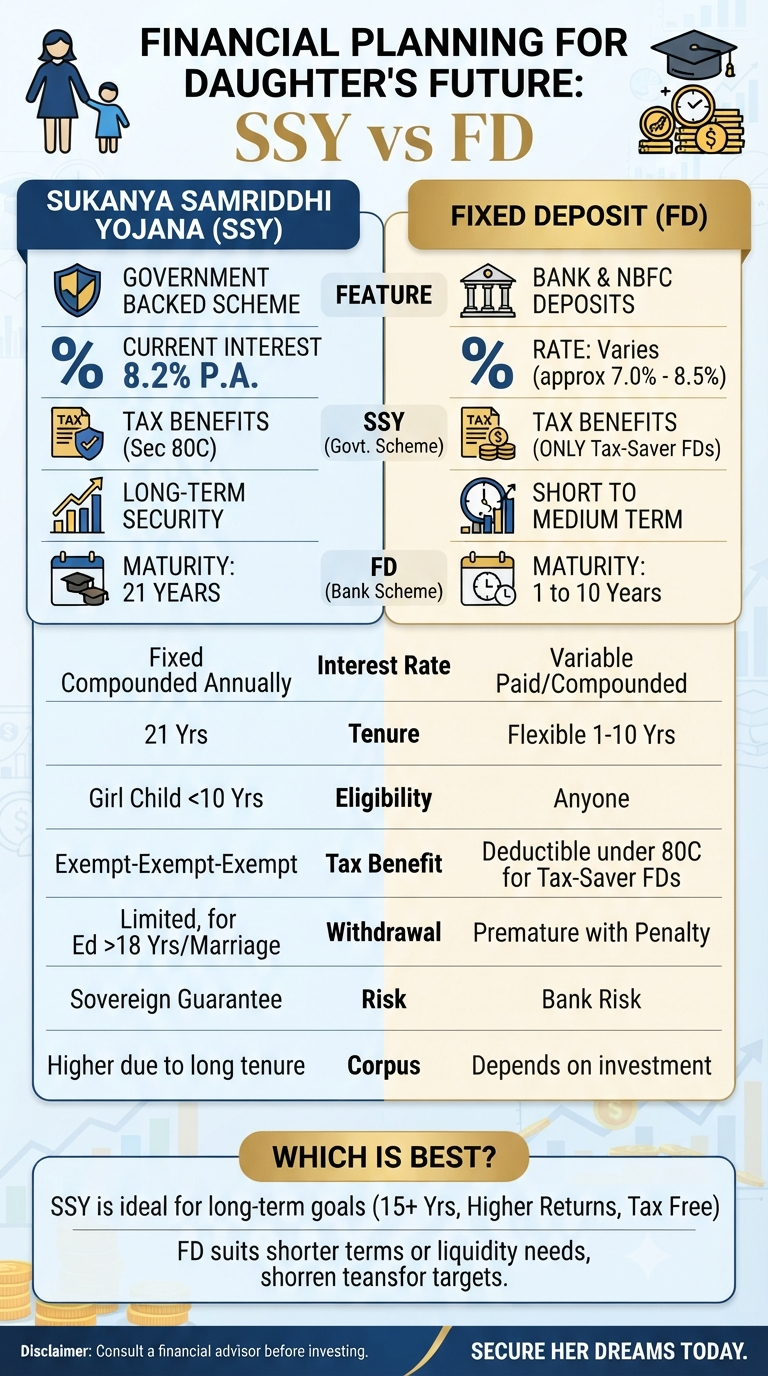
As parents, we are constantly looking ahead. We dream of our daughter’s college graduation, her first steps into a career, and perhaps her wedding day. But dreams, while priceless, require pragmatic financial planning to become reality. When it comes to securing a financial corpus for a girl child in India, two names inevitably pop up…
Continue Reading Secure Her Dreams: Decystifying the SSY vs. FD Battle for Your Daughter’s Future

We’ve all been there—staring at the bank balance, feeling the familiar squeeze of anxiety, and wondering when things will finally get easier. Often, we treat money problems purely as a logistical issue: we need more income, less debt, or a better budget. But what if the key to financial freedom isn’t just found in a…
Continue Reading From Scarcity to Abundance: 5 Daily Rituals to Unlock True Financial Prosperity
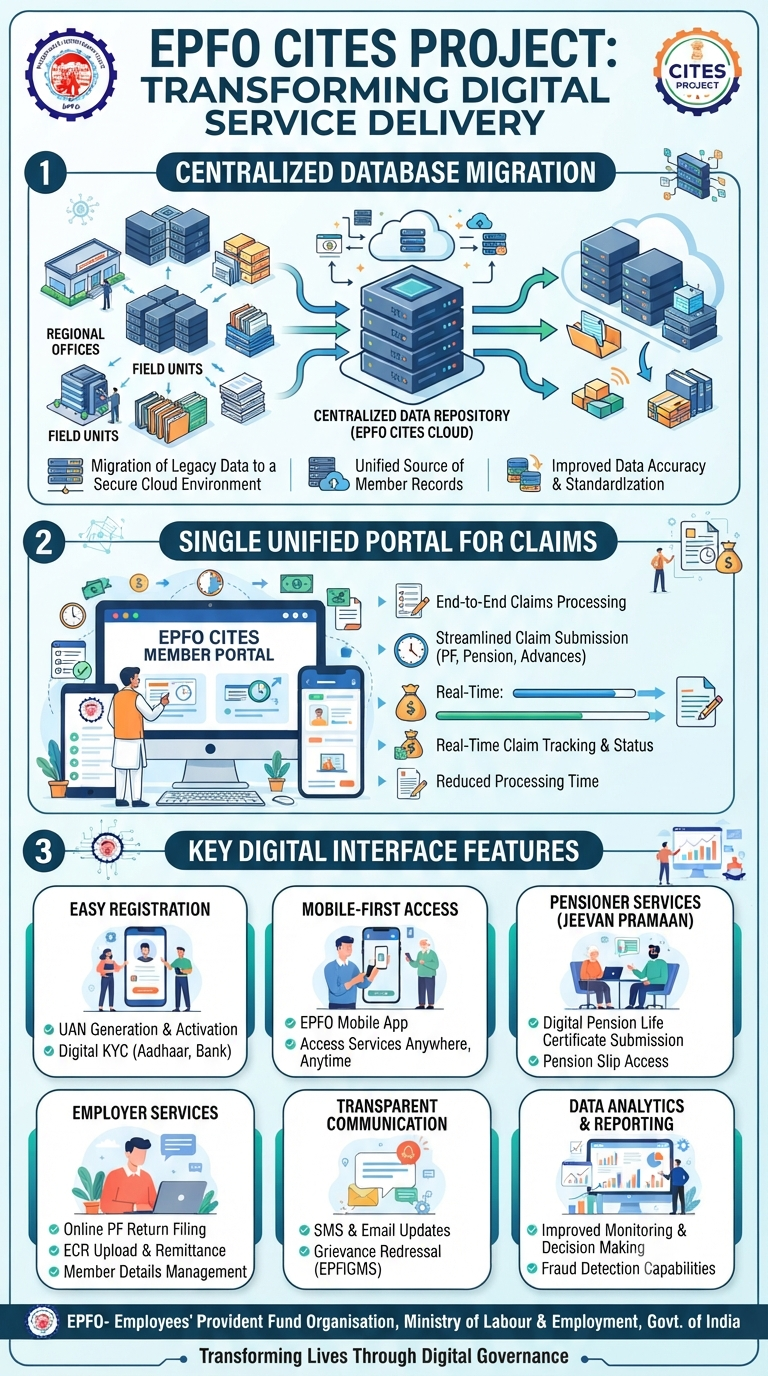
For decades, interacting with the Employees’ Provident Fund Organisation (EPFO) often felt like stepping back in time. Between the mountain of physical paperwork, the anxiety of waiting for transfer approvals, and the occasional need to visit regional offices just to check a status update, the system was ripe for a modern evolution. Well, that evolution…
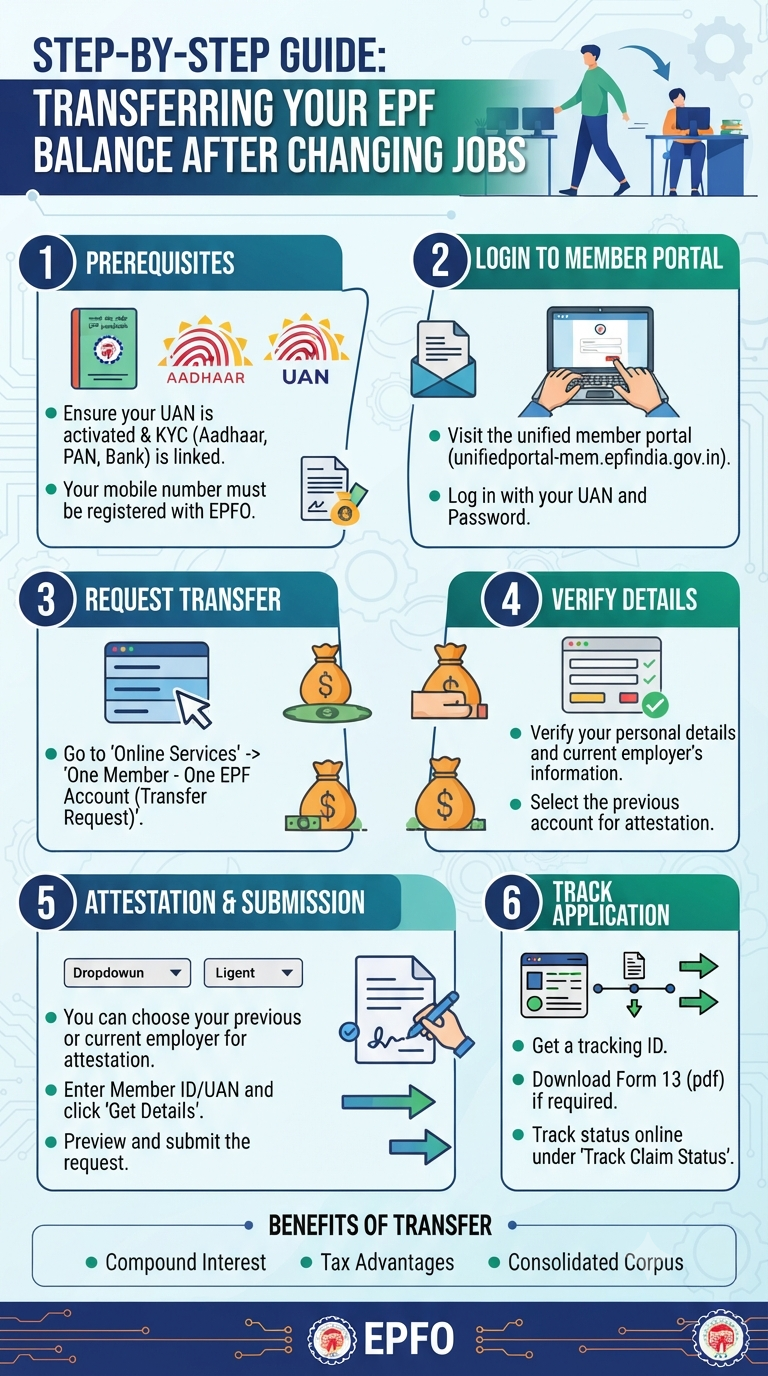
Switching jobs is an exciting milestone, but it often brings a laundry list of administrative tasks. One of the most important, yet frequently overlooked, responsibilities is managing your Employees’ Provident Fund (EPF). Leaving your old PF account dormant can cause complications down the line. The good news? The EPFO has revamped its member portal to…
Continue Reading New Job? Here’s How to Seamlessly Transfer Your EPF Balance
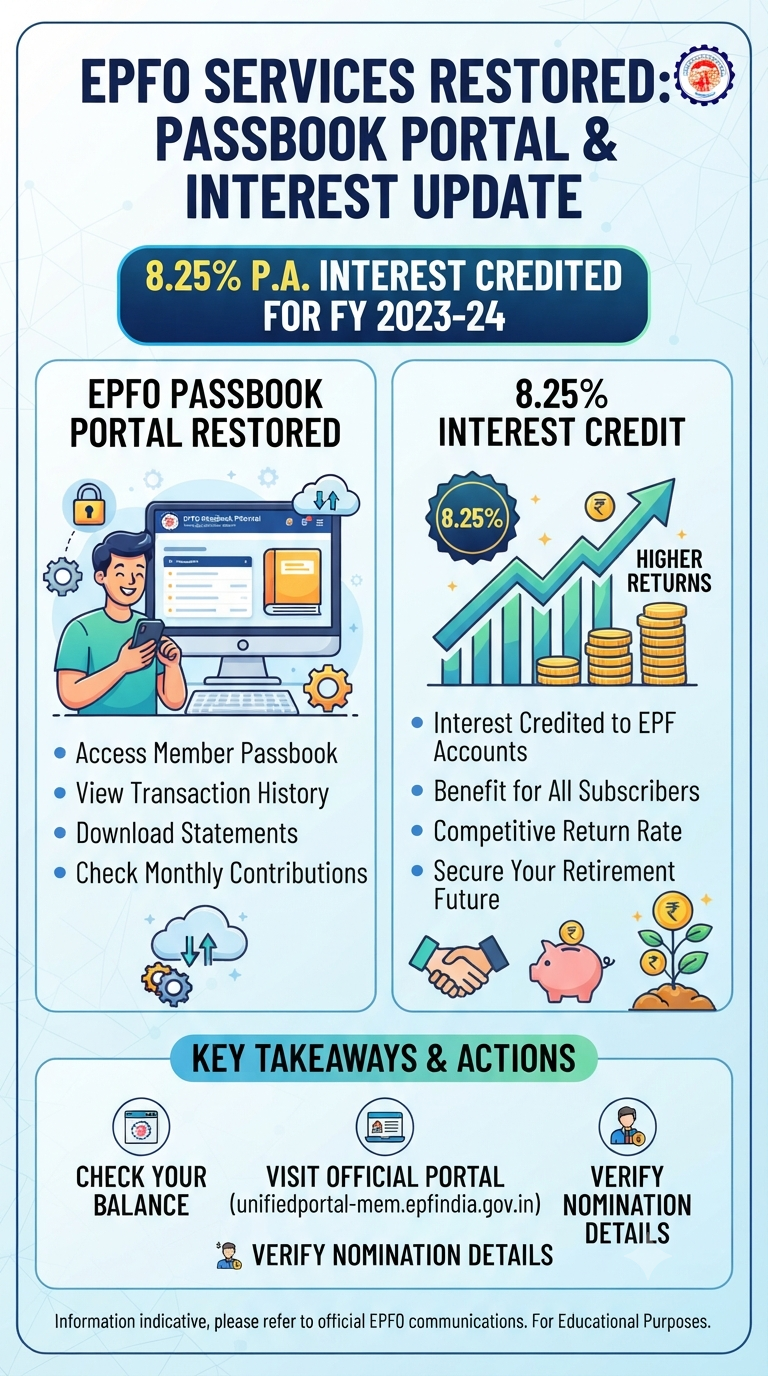
For millions of employees across India, the Employees’ Provident Fund (EPF) is more than just a mandatory deduction—it’s the bedrock of a secure retirement. So, when the EPFO passbook portal goes down for maintenance, it’s understandable that anxiety levels spike. After all, your passbook is the window into your financial future. The good news? The…

Shreejith is the founder of InfographicStory.com, a hub for visual learning and data storytelling. Dedicated to simplifying complex ideas, he creates infographics that turn facts into insights. Have questions or collaboration ideas? Reach out to him at storyinfographic@gmail.com.