Have you ever noticed how your salary seems to evaporate the moment it hits your bank account? You work hard all month, but by the time you’ve paid off your credit card bill, the EMI for that smartphone you bought six months ago, and the installment for your last vacation, there’s barely enough left to cover groceries.
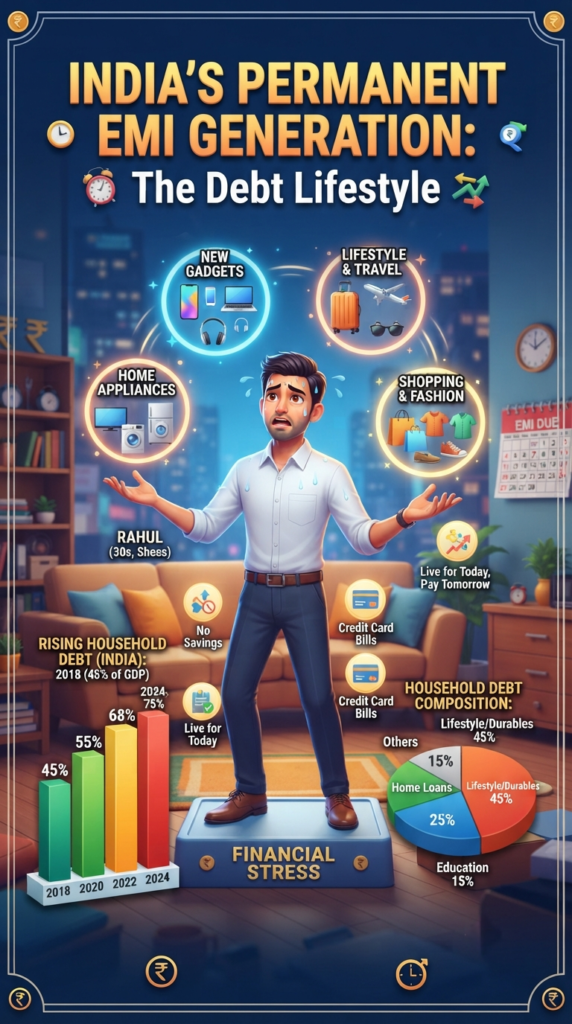
If this sounds familiar, you aren’t alone. In fact, you’re part of a growing demographic that experts are calling India’s “Permanent EMI Generation.”
From Occasional Debt to a Way of Life
A decade or two ago, taking a loan was a “big” decision. You borrowed to buy a home, to pay for your children’s education, or perhaps for a car. It was deliberate, planned, and often carried a sense of weight.
Today, the psychological barrier to borrowing has completely collapsed. We have entered the era of the “Buy Now, Pay Later” culture, where everything from high-end furniture and air conditioners to clothes and even sneakers can be purchased on EMI with a few simple clicks on a smartphone.
As Arjun Guha Thakurta, Executive Director at Anand Rathi Wealth Limited, notes, the shift is stark: debt has moved from being an occasional necessity to a permanent fixture in our monthly budgets. We’ve replaced the “save-first, buy-later” mentality with “live-for-today, pay-tomorrow.”
The Data Behind the Stress
It’s not just a feeling; the numbers back it up. According to the Reserve Bank of India’s latest Financial Stability Report, household debt has climbed to 45.5% of GDP. Perhaps more telling is that non-housing retail loans—the kind used for gadgets, lifestyle, and consumption—now make up a massive 58.4% of total household borrowings, while home loans account for just 29%.
We aren’t just borrowing to build assets anymore; we’re borrowing to fuel our lifestyle.
The Compounding Cost of “Easy Credit”
The danger here isn’t necessarily the debt itself—it’s the invisibility of it. Digital lending platforms have compressed what used to be a week-long bank application process into a few minutes of screen-tapping. Because the friction of borrowing has disappeared, we often stop asking ourselves the most important question: “Do I actually need this?”
For young professionals, this is particularly perilous. When your twenties—the most valuable years for the magic of compounding interest—are spent servicing debt for discretionary items, you aren’t just paying for the product. You are paying for it with the future wealth that your investments could have generated.
How to Break the Cycle
Does this mean all loans are bad? Not at all. If your income is growing and your debt is managed, it can be a tool. However, the trap snaps shut when your lifestyle aspirations outpace your savings.
Here is the “real test” suggested by experts like Adhil Shetty, CEO of BankBazaar: After you pay your EMIs, are you still able to save regularly and handle an unexpected emergency without having to borrow again?
If the answer is no, it might be time to hit the brakes.
- Aim for the 40% Rule: Try to keep your total EMI obligations under 40% of your take-home pay.
- Invest Proportionally: As your income grows, ensure your investments grow at the same pace. If you get a 15% raise, don’t just increase your lifestyle spending—increase your investment contributions by 15% too.
- Prioritize Future You: Don’t let retirement planning or emergency funds take a backseat to a gadget upgrade. Those are fixed commitments to your future self.
Debt shouldn’t be a permanent state of being. It’s time to stop looking at the monthly installment and start looking at the total cost of our lifestyle. After all, the goal of working hard isn’t just to keep the “EMI cycle” running—it’s to build a life of genuine financial freedom.
Why Does That One Plug Pin Look Different? The Secret to Electrical Safety at Home

In our fast-paced lives, finding a meal that is both deeply comforting and genuinely healthy can feel like searching for a unicorn. We often default to heavy, overly processed foods when we crave comfort, only to feel sluggish and regretful afterward. But what if I told you there’s a dish that is the culinary equivalent…

We have all been there—that uncomfortable, tight feeling in your stomach after a heavy meal. Bloating and gas are incredibly common, but they can certainly put a damper on your day. While it might be tempting to reach for store-bought remedies, sometimes the best solutions are hiding right in your kitchen pantry. If you are…
Continue Reading Gas Relief in a Glass: 5 Simple Drinks to Ease Bloating Fast

When it comes to the produce aisle, it’s easy to find yourself in a standoff. You’re standing there, basket in hand, weighing the vibrant, glossy red of a punnet of strawberries against the delicate, complex structure of a pint of raspberries. They’re both delicious, they’re both beautiful, and they both scream “summer.” But if you’ve…

We all crave that perfect, soft, and glossy smile, but let’s be honest—our lips are high-maintenance. Because the skin on our lips is incredibly thin and delicate, they are often the first part of our face to show signs of dryness, flaking, or cracking. While the market is flooded with synthetic balms and treatments, nature…
Continue Reading Unlock Your Best Smile: The Ultimate Guide to Naturally Soft and Hydrated Lips
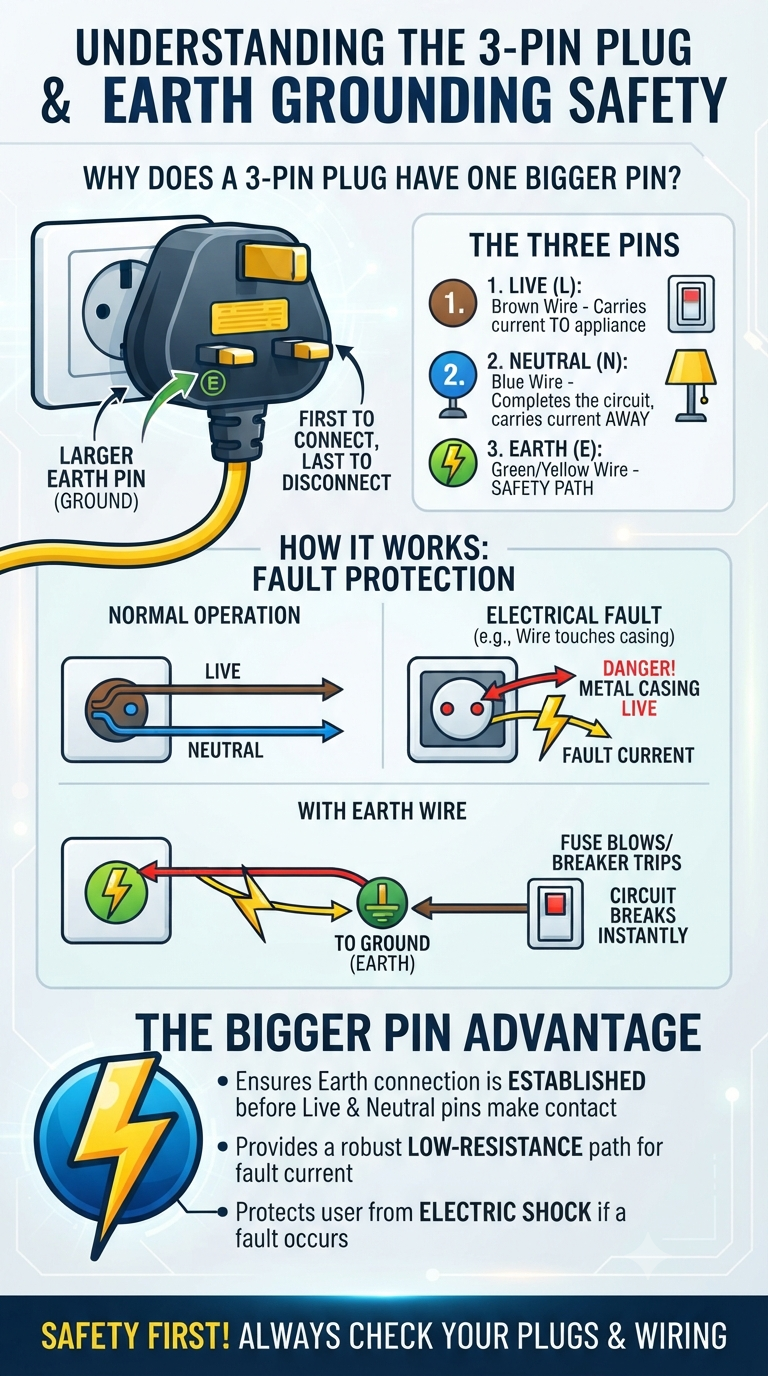
We’ve all been there—plugging in a heavy-duty appliance like an AC, a refrigerator, or a microwave, and noticing that one of the pins on the plug is noticeably bigger, thicker, or sometimes longer than the other two. It’s a design quirk that’s easy to overlook, but it’s actually one of the most important safety features…
Continue Reading Why Does That One Plug Pin Look Different? The Secret to Electrical Safety at Home
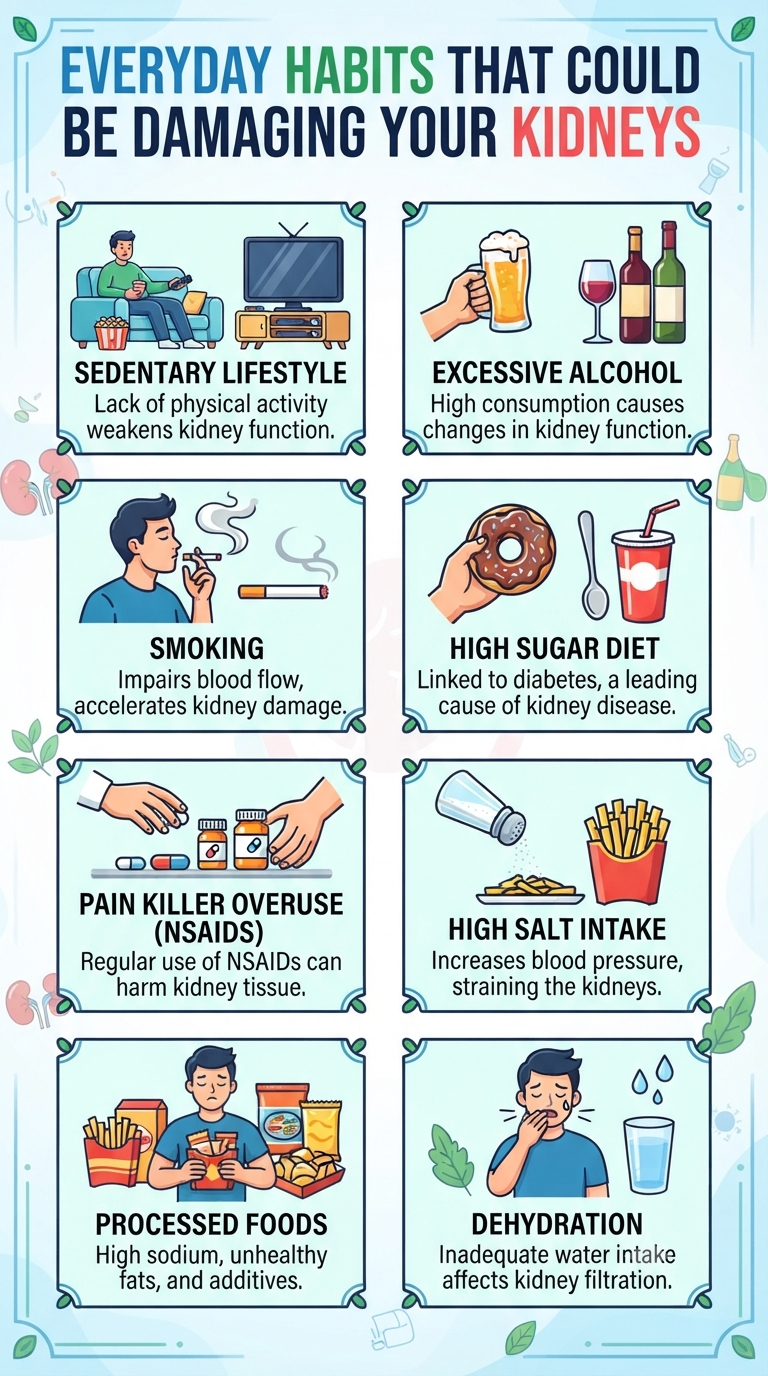
Your kidneys are the unsung heroes of your body, working tirelessly 24/7 to filter waste, regulate blood pressure, and balance fluids. Yet, we often unknowingly sabotage their vital work through the choices we make every single day. The infographic poster “Everyday Habits That Could Be Damaging Your Kidneys” highlights eight common culprits. Let’s dive deeper…
Continue Reading Silent Saboteurs: Are Your Daily Habits Secretly Harming Your Kidneys?

Shreejith is the founder of InfographicStory.com, a hub for visual learning and data storytelling. Dedicated to simplifying complex ideas, he creates infographics that turn facts into insights. Have questions or collaboration ideas? Reach out to him at storyinfographic@gmail.com.