You’ve done your homework. You’ve read the financial news, listened to the podcasts, and decided it’s time to secure your financial future. To build a robust, resilient portfolio, you adopt a “more is merrier” strategy, buying into several different mutual funds to ensure you are diversified.
But here is a hard truth that many investors miss: Owning more funds does not automatically mean you have better diversification.
In fact, you might be unknowingly constructing a portfolio riddled with “portfolio overlap.” You could hold five different funds, managed by five different asset management companies, only to find that they all essentially own the same top 20 stocks.
Let’s unpack why this happens, why it’s dangerous for your wealth, and how to fix it.
The Puzzle of Duplicate Holdings
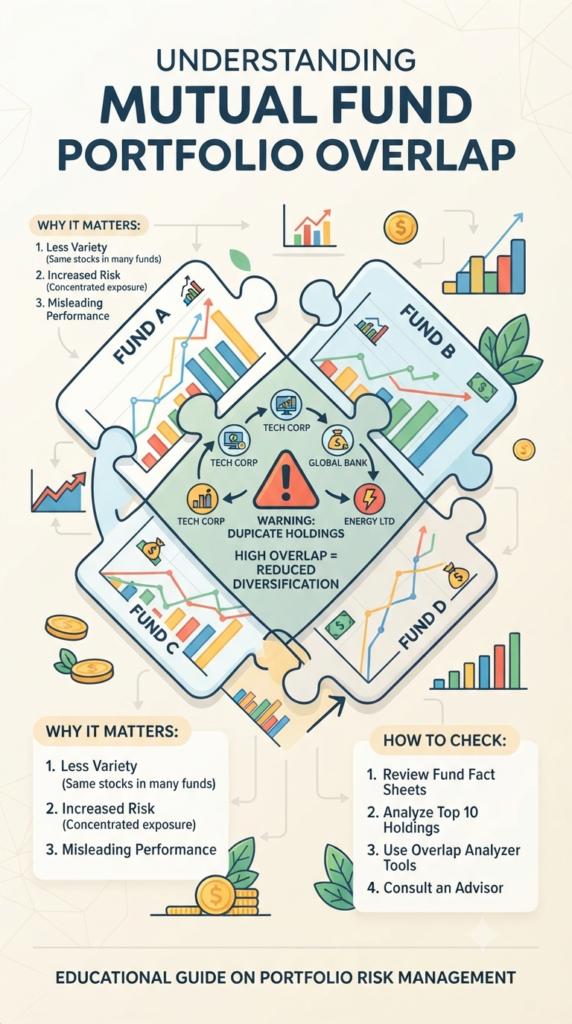
Imagine your mutual fund portfolio as a physical puzzle. Each fund represents a unique puzzle piece designed to fit together to create a complete picture of the market.
Ideally, Fund A covers Technology, Fund B covers Healthcare, Fund C covers Energy, and so on.
However, the reality often looks more like the image above. Your puzzle pieces don’t fit neatly side-by-side; instead, they stack on top of each other.
When Fund A, Fund B, Fund C, and Fund D all hold significant positions in the same giants—like “Tech Corp,” “Global Bank,” and “Energy Ltd”—you have created a massive area of overlap.
This overlap transforms your diversified portfolio into a concentrated bet on a handful of companies.
Why Portfolio Overlap Matters (The Three Risks)
Why should you care if your funds share common holdings? Because this redundancy introduces three critical risks to your financial health.
1. Less Variety (The Illusion of Diversification)
The primary goal of diversification is to spread risk so that if one sector tanks, another might rise. If 60% of your entire portfolio is tied up in the same ten tech stocks spread across three different mutual funds, you haven’t diversified. You’ve just concentrated your risk. If that sector corrects, your entire portfolio suffers, regardless of how many fund names you own.
2. Increased Risk (Concentrated Exposure)
When you have high overlap, you lose the benefit of varying management styles. You might think you own a “Growth Fund” and a “Value Fund,” but if both hold the same top heavy-hitters, they will behave identically. This amplifies volatility. A downturn in a single shared holding hits your portfolio not just once, but multiple times through different funds.
3. Misleading Performance
Overlap can create a false sense of security during a bull market. When the top tech stocks are soaring, all your funds will look like rock stars. You might believe you are a brilliant investor picking winners across the board. However, this masks the underlying weakness: your returns are entirely dependent on a narrow segment of the market. When that segment turns, the fall will be swift and severe across all your holdings.
How to Check for Overlap and Take Control
Don’t panic. You don’t need to liquidate your entire portfolio and start from scratch. But you do need to audit your investments. Here is a simple, four-step checklist to determine if you are caught in the overlap trap:
- Review Fund Fact Sheets: Don’t just rely on the fund’s catchy name. Look at the actual documentation.
- Analyze Top 10 Holdings: This is the most crucial step. Compare the top 10 holdings of every fund you own. Are you seeing “Tech Corp” or “Global Bank” appearing on three or four different lists? If yes, you have overlap.
- Use Overlap Analyzer Tools: You don’t need to do this manually. Many financial websites offer free portfolio overlap tools. Simply enter your ticker symbols, and the software will generate a visual report showing exactly where your funds collide.
- Consult an Advisor: If the analysis proves complex, a fee-only financial advisor can provide an objective view and help you restructure your portfolio to achieve true diversification.
The Bottom Line
The goal of investing isn’t to collect the most fund statements; it’s to build a resilient financial future based on asset allocation, not just fund accumulation.
Take the time today to look under the hood of your investments. Ensure your puzzle pieces actually fit together to form a diversified picture, rather than sitting in a redundant, risky pile. Break the cycle of the overlap trap and build a portfolio that is truly as diversified as you think it is.
Disclaimer: This article is for informational purposes only and should not be considered financial advice. Always do your own research or consult a professional before making investment decisions.
Nourish Your Way to Wellness: A Sustainable Approach to Blood Sugar Management and Weight Loss

Retirement often feels like a distant milestone—something to worry about “later.” But what if you could visualize that “later” right now? Imagine hitting age 60 with a solid ₹3 crore corpus. It’s not just a number on a screen; it’s the key to your financial independence, the bridge to your passions, and the ultimate safety…
Continue Reading Retire Rich: How a ₹3 Crore Corpus Can Power Your Dream Life
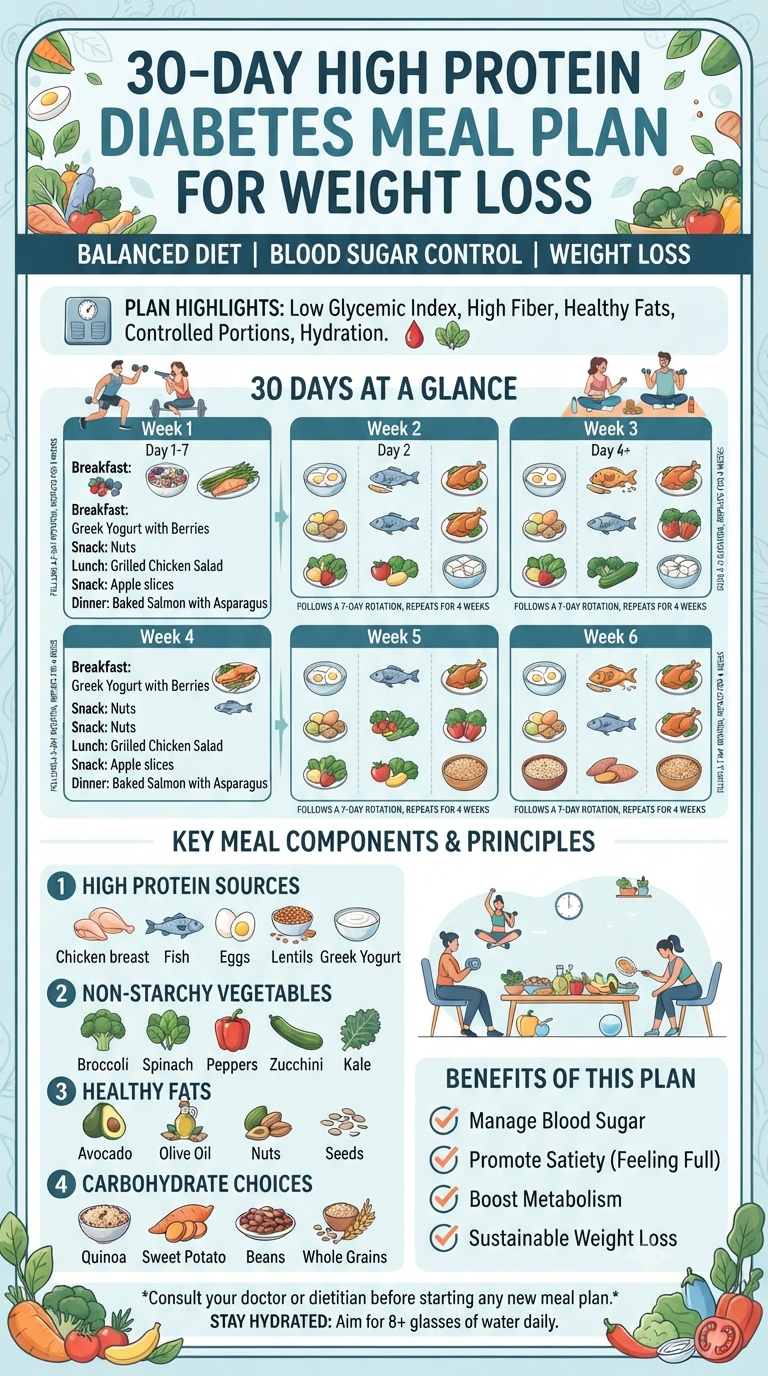
When it comes to health, we’re often bombarded with quick fixes and extreme restrictions. But what if the secret to managing blood sugar and achieving weight loss wasn’t about deprivation, but about intentional, high-protein nourishment? If you’ve been looking for a way to reset your habits without feeling constantly hungry, a high-protein, diabetes-friendly approach might…
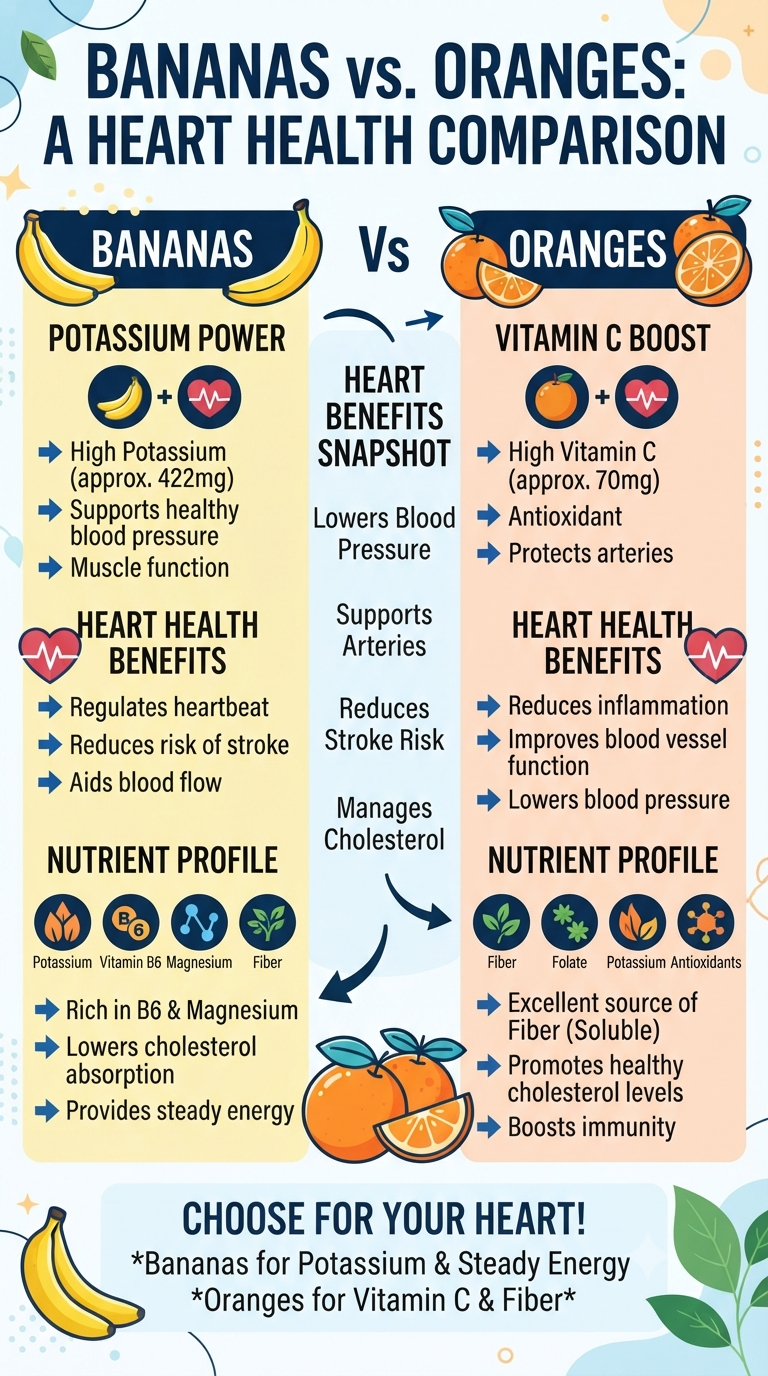
When you’re staring at the fruit bowl wondering which snack will do your heart the most good, it’s easy to feel torn. Do you reach for the convenient banana or the zesty, refreshing orange? Both are nutritional powerhouses, but they bring different strengths to your cardiovascular game. Let’s break down how these two favorites measure…
Continue Reading Heart-Healthy Snacking: The Battle of the Fruits
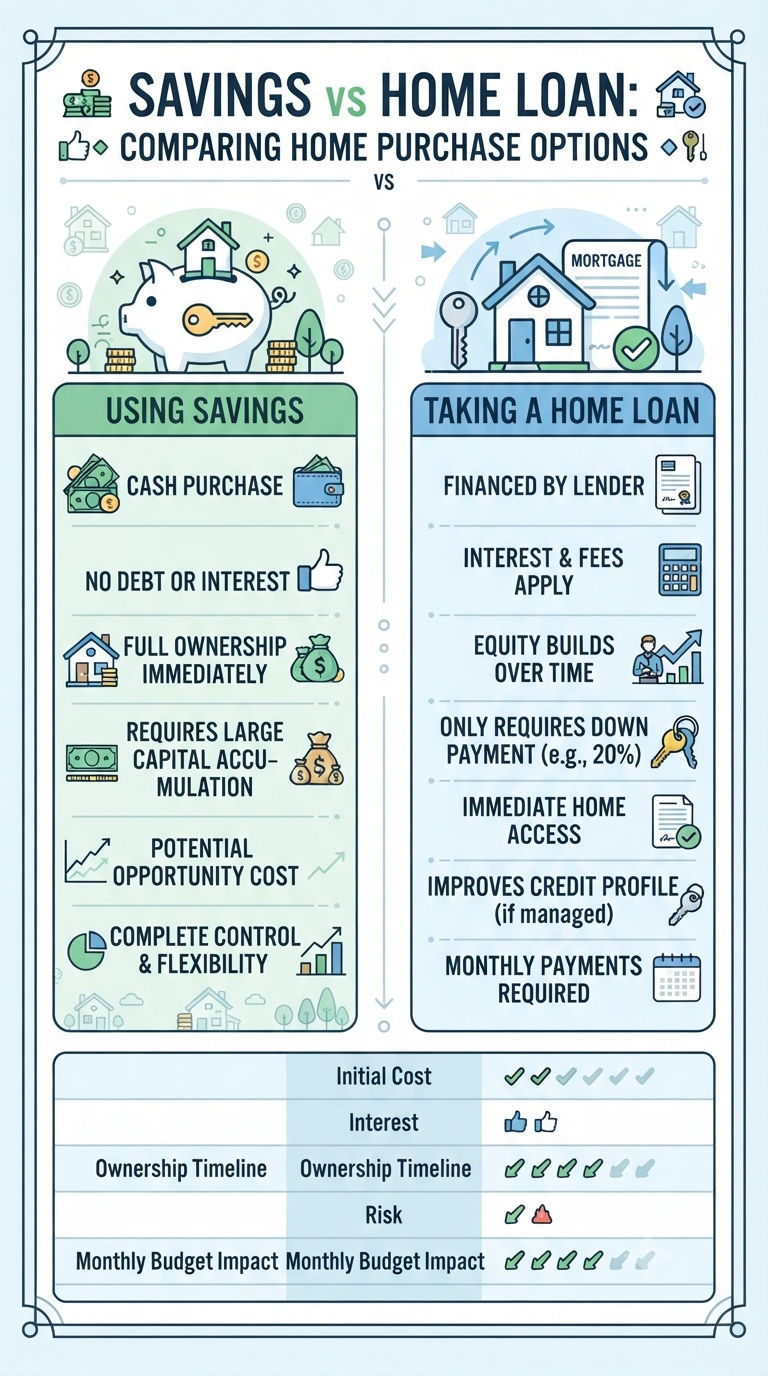
Buying a home is one of life’s biggest milestones. For most people, it’s not just a house—it’s a long-term investment in their future and a place to build a life. But with such a massive price tag, a fundamental question arises: Should I save up and pay cash, or should I take out a home…
Continue Reading The Ultimate Showdown: Is it Better to Buy Your Dream Home with Cash or a Mortgage?
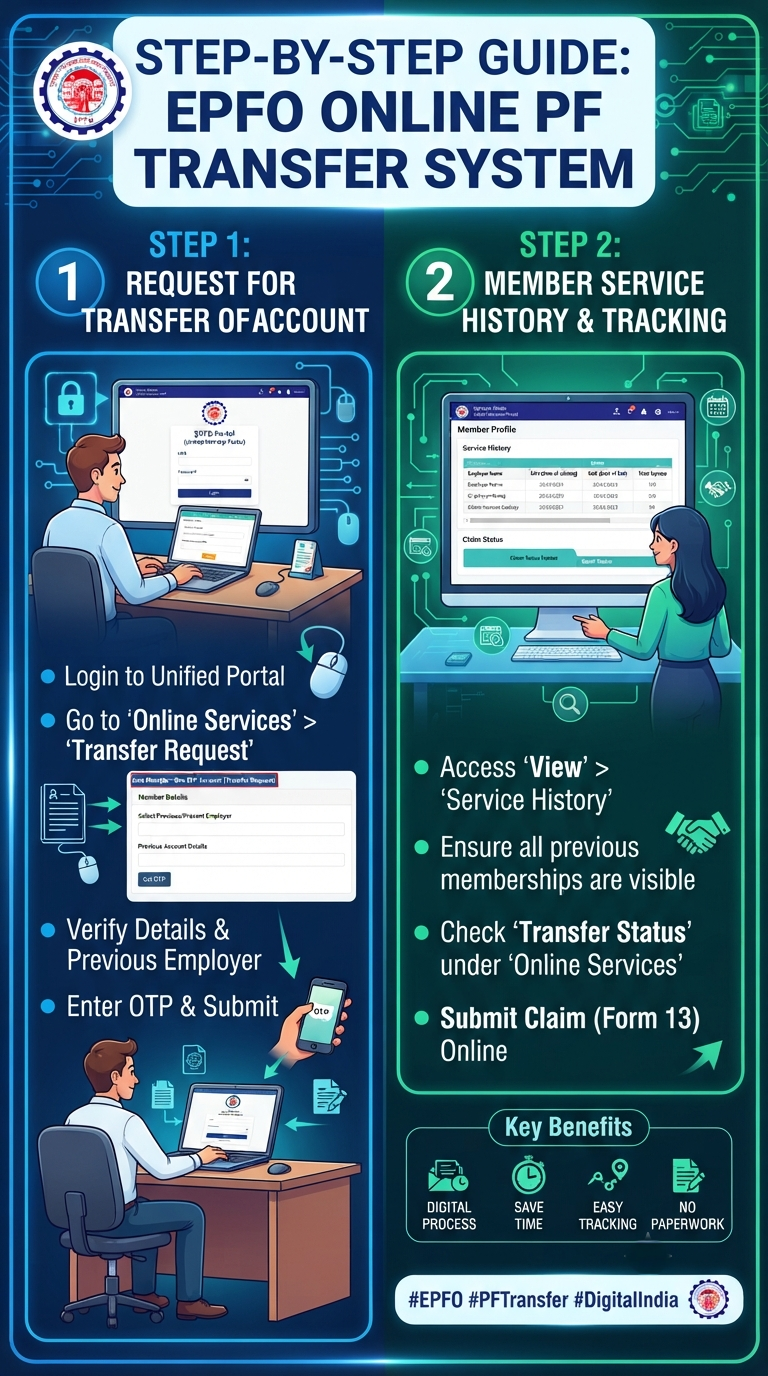
Let’s be honest: tracking down old Provident Fund (PF) accounts from past jobs feels like a chore no one wants to tackle. Between the mountain of forms, the fear of losing service history, and the sheer time it takes, many of us just leave our old accounts sitting idle. But what if you could clean…
Continue Reading Say Goodbye to Paperwork: How to Consolidate Your EPF Accounts Online
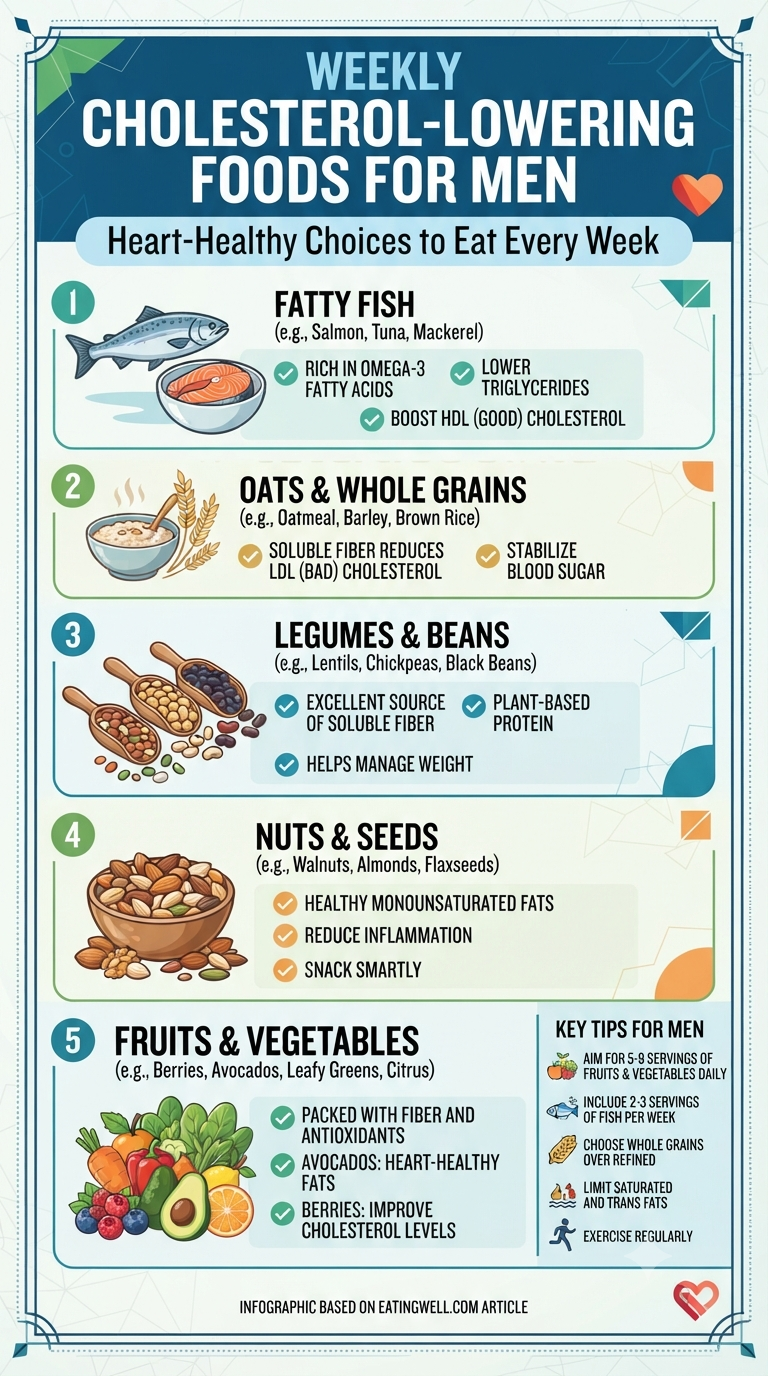
When it comes to longevity, men often focus on building muscle or increasing stamina, but there is a silent powerhouse that deserves just as much attention: your cholesterol levels. Managing cholesterol isn’t just about what you don’t eat—it’s about what you do add to your plate. If you’re looking for a simple, actionable way to…
Continue Reading Take Control of Your Heart Health: 5 Simple Foods to Add to Your Weekly Routine

Shreejith is the founder of InfographicStory.com, a hub for visual learning and data storytelling. Dedicated to simplifying complex ideas, he creates infographics that turn facts into insights. Have questions or collaboration ideas? Reach out to him at storyinfographic@gmail.com.